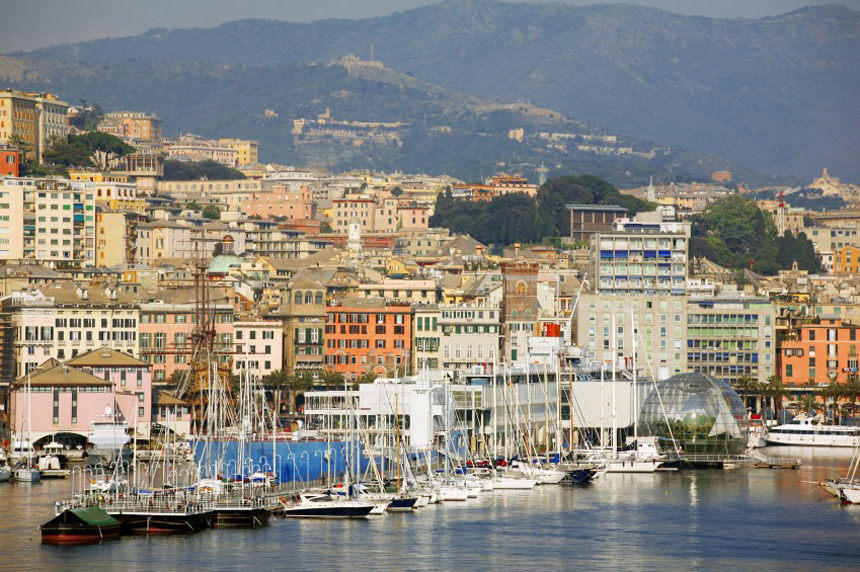
The
Europe tour has broadened us the views on the European culture and its
societies. It is indeed a good course in life to walk ten thousand
miles and read ten thousand books. While the Italian Dolomites shows
its charm of nature, Paris shows human strength to encounter human
problems. Hope to discuss some common issues with you guys.
Liberty, Equality, Fraternity is the national motto of France , and De Gaulle did openly criticised the U.S. intervention in Vietnam[3] and the "exorbitant privilege" of the U.S. dollar,[4] and withdrew from NATO's.
Paris today has shown its ability as a fabulously colourful mixture
of Christians, Muslims, Jews, Buddhists, Hindus, atheists and a
forerunner in such a complicated multiculturalism despite that many
Europeans are deeply uneasy with this diversity.
However, it is said that The EU polity in Europe is constrained
on political competition. Parties on the left cannot promise high
social protection or expansionary spending policies, and parties on the
right cannot promise labour market deregulation or tax cuts. The choice,
then, is either to accept the constraints of the EU polity or to
advocate radical reform of, or withdrawal from, the EU. Greece is an exemplar of the flaws in the European welfare model.
It is also said that The rise of Christian democracy in Europe has now shown that Catholicism can be Both Solution and Problem in Democracy.
Bill
Liberty, Equality, Fraternity is the national motto of France. This legacy
of the Age of Enlightenment, the motto "Liberté, Egalité, Fraternité"
first appeared during the French Revolution. Although it was often
called into question, it finally established itself under the Third
Republic. It
was rejected during the Second Empire, but finally became established
under the 3rd Republic. There is still some resistance, even among
partisans of the Republic: solidarity is sometimes preferred to
equality, which implies social levelling, and the Christian connotation
of brotherhood is not always unanimously accepted.
When
the Constitution of 1848 was drafted, the slogan “Liberté, Égalité,
Fraternité” was defined as a “principle” of the Republic. Founded
in 1792, the French Republic has been defined and redefined by a
succession of regimes and institutions, a multiplicity of symbols, and a
plurality of meanings, ideas, and values. Although constantly in flux,
the Republic has nonetheless produced a set of core ideals and practices
fundamental to modern France's political culture and democratic life to
deal with the press; immigration; decolonization; anti-Semitism;
gender; the family; cultural policy; and the Muslim headscarf debates.
France retreated from NATO as early as 1959.
Charles de Gaulle - Wikipedia, the free encyclopedia
Mobile-friendly - This article is about the Frenchstatesman. ... He was the leader of Free France ( 1940–44) and the head of the Provisional ... a policy of "national independence" which led him to withdraw from NATO's ...
de Gaulle initiated his "Politics of Grandeur",[2] asserting
that France as a major power should not rely on other countries, such
as the United States, for its national security and prosperity. To this
end, de Gaulle pursued a policy of "national independence" which led him
to withdraw from NATO's military integrated command and to launch an independent nuclear development program that made France the fourth nuclear power. He restored cordial Franco-German relations in order to create a European counterweight between the "Anglo-Saxon" (American and British) and Soviet spheres of influence.
De Gaulle openly criticised the U.S. intervention in Vietnam[3] and the "exorbitant privilege" of the U.S. dollar,[4]
France and NATO: An History - Cairn International
Tony Blair: public can't be trusted to make 'sensible choice' on EU
‘privatization’ of religions as concomitant has been severe with modernization.1 religion
reappears from the public arenas of their respective soci‐ eties or
from the constitution of collective identities very forcibly. Indeed,
one of the most important aspects of the contemporary scene was that of
religions, which, relegated or confined in the classical model of the
nation‐state and revolutionary state to private or sec‐ ondary public
spheres, re‐entered the major political and cultural arenas and the
central frameworks of collective identities of many societies.
one
of the most important changes in the contemporary global scene has been
the development of transnational religious and/or ethnic virtual
associations, communities and networks, among which diasporic
communities and networks are most important. The most significant among
such diasporic communities and networks are the Muslim one, or ones,
especially in Europe and in the USA.
The unkindest cuts
Many countries face the difficult choice of upsetting the markets or upsetting their voters. Countries have long had a complicated relationship with their national debt.
Greece
is an exemplar of the flaws in the European welfare model. The state
gets remorselessly bigger because political parties of the right and
left have bought votes by providing supporters with jobs or subsidies.
the state must “remove benefits that have built up like a ship
accumulates barnacles”. Public-sector workers were mollycoddled with pay
for 13 or 14 months per year and arcane allowances.
Tax
evasion is widespread. A report by the London School of Economics
estimates that it reduced Greece's potential tax yield by 26%. It is
normal to do deals under the table.
In
Greece spiralling debt costs also forced the government to turn to the
IMF as well as to its EU partners. But it remains to be seen whether the
population will tolerate the austerity needed to bring the debt burden
down to a reasonable level. The most recent package of cuts provoked a
wave of strikes and riots in which three bank employees died.
As
the European Union has expanded and its powers have grown, the need has
emerged for a constitutional regime. From 2001 onwards great effort was
invested in consolidating and adopting a common constitutional treaty.
One of the first polemics regarding this treaty concerned the reference
to God in the constitu‐ tional preamble. Given the symbolic weight
attached to the formulation of such declarations, the discussion was
contentious as many assumed that the consti‐ tution was intended to
express the concepts and values on which the new politi‐ cal body would
be based.While the preamble of the draft constitution did mention God,
as well as the Christian values of Europe, the final version that was
adopted omitted both and offered instead a compromise formulation:
‘inspiration from the cultural, religious and humanistic inheritance of
Europe.’ Jun 24th 2010
The transformations of the religious dimension and the crystallization of new civilizational visions and relations
A
far‐reaching resurgence or reconstruction of religions is taking place
in the con‐ temporary world.This resurgence is manifest in many ways,
including the rise of new religious (especially fundamentalist and
communal‐national) movements; the crystallization of new diasporas with
strong religious identities; profound transformations within the major
religions; and the growing importance of reli‐ gious components in the
constitution of contemporary public arenas and in the constitution of
collective identities. All these developments have far‐reaching
implications for the place of religion in the contemporary era, calling
into ques‐ tion a basic assumption of public discourse which assumed the
weakening and
‘privatization’ of religions as concomitant with modernization.1Indeed, in the early stages of the crystallization of the post‐WorldWar II social and political scene, it seemed as if several aspects of the development of religious organizations and behaviour in modern societies had become predomi‐ nant, attesting indeed to the continual secularization of modern societies.The most important of these aspects were: first, the growing specialization of the reli‐ gious sphere in the modern world and its differentiation from other institutional arenas – the religious sphere having become just one institutional and semantic sphere, among many others; second, the weakening or loss of the predominant place of religion in the modern world‐view as compared to earlier periods; and third, the growing deritualization both of the central public sphere and of many components of private life, and the weakening of official religious institutions.
‘privatization’ of religions as concomitant with modernization.1Indeed, in the early stages of the crystallization of the post‐WorldWar II social and political scene, it seemed as if several aspects of the development of religious organizations and behaviour in modern societies had become predomi‐ nant, attesting indeed to the continual secularization of modern societies.The most important of these aspects were: first, the growing specialization of the reli‐ gious sphere in the modern world and its differentiation from other institutional arenas – the religious sphere having become just one institutional and semantic sphere, among many others; second, the weakening or loss of the predominant place of religion in the modern world‐view as compared to earlier periods; and third, the growing deritualization both of the central public sphere and of many components of private life, and the weakening of official religious institutions.
Nor
did religion disappear from the public arenas of their respective soci‐
eties or from the constitution of collective identities. In fact,
religion started to re‐enter these arenas – very forcibly. Indeed, one
of the most important aspects of the contemporary scene was that of
religions, which, relegated or confined in the classical model of the
nation‐state and revolutionary state to private or sec‐ ondary public
spheres, re‐entered the major political and cultural arenas and the
central frameworks of collective identities of many societies.
This new religious constellation that crystallized during the last two decades of the 20th century was characterized by the paradoxical combination of, first, grow‐ ing multiplication and privatization of religious orientations and sensibilities; the concomitant enhancement of possibilities of choice, for individuals and groups, between such visions, with utopian orientations becoming focused on the search for some creativity or authenticity within multiple dispersed social settings, con‐ nected with a growing trend to much more diversified, ‘multicultural’ orientations. Second, these new religious constellations were characterized by the weaken‐ ing of institutionalized religion and of the major official religious institutions and organizations and by the decline in their membership.Third, it was characterized by the resurgence of religious sensibilities and their transformation and transpo‐ sition into the centres of national and international political activity, and in the constitution of collective identities.
The most significant among such diasporic communities and networks are the Muslim one, or ones, especially in Europe and in the USA. Also – though with significant differences – there are the Chinese and possibly Indian and Korean diasporas in East Asia, in the USA and in Europe, as well as Jewish communities, especially in Europe. It is true that diasporic communities such as ‘overseas’ Chinese or Indian ones have existed for long periods of history – as did, of course, transnational or trans‐imperial reli‐ gions such as the Catholic, ‘orthodox’ Christian and Buddhist ones, not to men‐ tion the Jewish religious ones. These have also brought about a far‐reaching transformation in the constitution of religious communities and their participa‐ tion in public spheres and in the constitution of collective identities.
This new religious constellation that crystallized during the last two decades of the 20th century was characterized by the paradoxical combination of, first, grow‐ ing multiplication and privatization of religious orientations and sensibilities; the concomitant enhancement of possibilities of choice, for individuals and groups, between such visions, with utopian orientations becoming focused on the search for some creativity or authenticity within multiple dispersed social settings, con‐ nected with a growing trend to much more diversified, ‘multicultural’ orientations. Second, these new religious constellations were characterized by the weaken‐ ing of institutionalized religion and of the major official religious institutions and organizations and by the decline in their membership.Third, it was characterized by the resurgence of religious sensibilities and their transformation and transpo‐ sition into the centres of national and international political activity, and in the constitution of collective identities.
The most significant among such diasporic communities and networks are the Muslim one, or ones, especially in Europe and in the USA. Also – though with significant differences – there are the Chinese and possibly Indian and Korean diasporas in East Asia, in the USA and in Europe, as well as Jewish communities, especially in Europe. It is true that diasporic communities such as ‘overseas’ Chinese or Indian ones have existed for long periods of history – as did, of course, transnational or trans‐imperial reli‐ gions such as the Catholic, ‘orthodox’ Christian and Buddhist ones, not to men‐ tion the Jewish religious ones. These have also brought about a far‐reaching transformation in the constitution of religious communities and their participa‐ tion in public spheres and in the constitution of collective identities.
2013/03/Religion-and-Democracy-in-Contemporary-Europe.pdf
Crossing the Gods: World Religions and World Politics
Poland: Catholicism as Both Solution and Problem. There are .... returned to a more traditional religious role with the restoration of democracy in the mid-1980s.
Catholicism as Both Solution and Problem to Democracy